
Feeds, naps and nappies
Preparing and sterilising bottles, feeds, nappy changes, baths and settling a baby back to sleep, following the routine you set rather than one she brings.
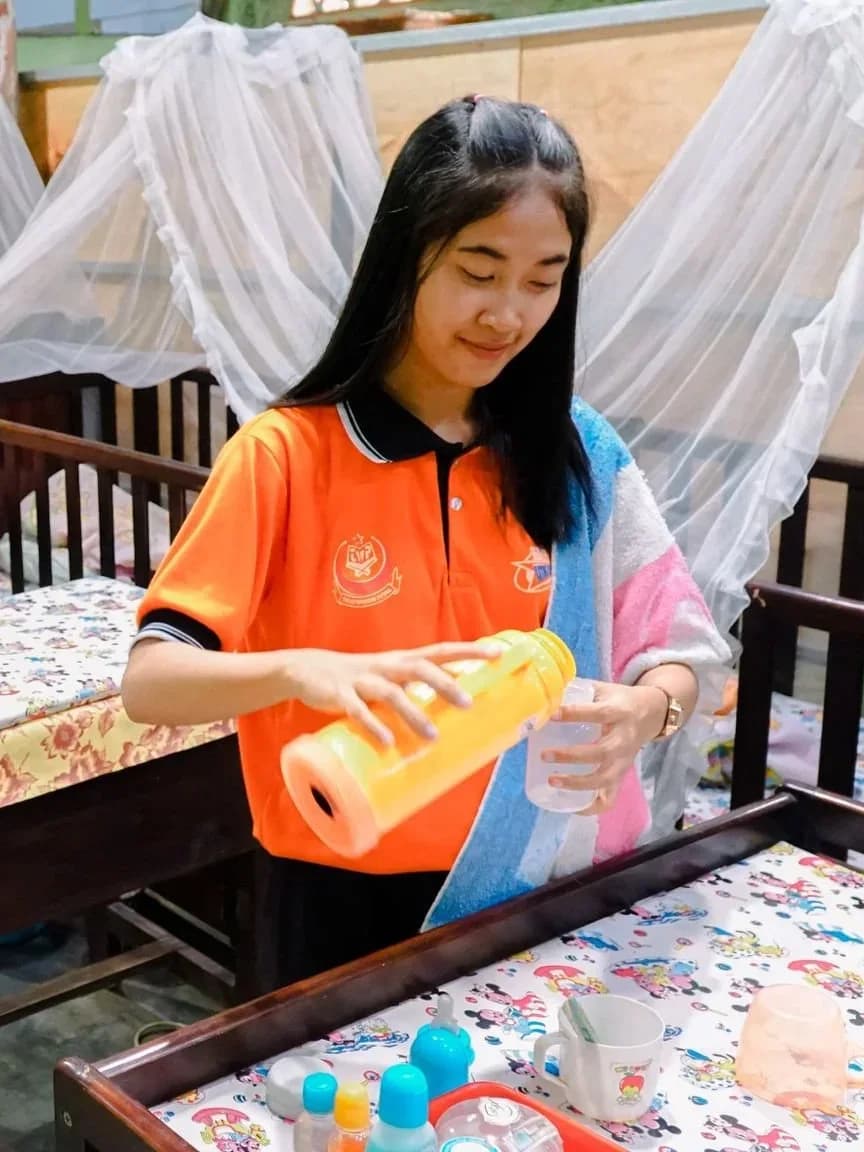
Infant care training: trainee helpers practising newborn bottle feeding beside cots. A training centre, not a placement in a customer's home.
MOM EA Licence 24C2490
Childcare and infant care
Patient, practical help with newborns, toddlers and the school run, from a helper matched to how your household actually works. We are straight with you about what a domestic helper can do with a baby, and about what she is not.
The short answer. A childcare helper is a domestic helper whose main work is caring for your children alongside the home: feeds, naps and sterilising for a baby, routines and school runs for older children, and the cooking, laundry and tidying around them. She is not a confinement nanny and not an infant care nurse. If you have a Singapore Citizen child under 16 and your household meets MOM's conditions, your levy can be S$60 a month instead of S$300.
What a childcare helper does
Preparing and sterilising bottles, feeds, nappy changes, baths and settling a baby back to sleep, following the routine you set rather than one she brings.
Mealtimes, naps, play, tidy-up and the steady daily rhythm that keeps a toddler settled when both parents are at work.
Drop-offs and pick-ups, packing bags, snacks after school and sitting with a child through reading or homework.
Cooking food your children will actually eat, including weaning meals and allergy-safe cooking where your doctor has set the rules.
Hygiene, safe sleep habits, watching the kitchen, the bathroom and the balcony, and knowing to call you the moment something is wrong.
Laundry, tidying and the cleaning that keeps a home with young children liveable instead of a second full-time job for you.
If the household work is the bigger half of what you need, read what a housekeeping helper covers day to day. Many families end up somewhere between the two, and we would rather set the balance honestly before she arrives than after.
Who it is right for
You want a second pair of hands for feeds, sterilising and the endless washing, with you still at home making the decisions.
Someone dependable has to be there for the nursery run, the call about a fever at 2pm, and dinner before bedtime.
A toddler at home and an older child in school pull a household in opposite directions on the same afternoon.
Family help was meant to be temporary and has quietly become permanent. A helper takes the weight off without moving your child out of the home.
If your household also has an elderly parent to look after, the needs and the levy rules are different, and we set them out on our eldercare helper page. If you need someone in place quickly, a transfer helper already in Singapore can usually start sooner than an overseas hire. And if your home keeps a halal kitchen, we also place helpers for Malay-speaking and Muslim families, matched on the kitchen and the routine as much as on the children.
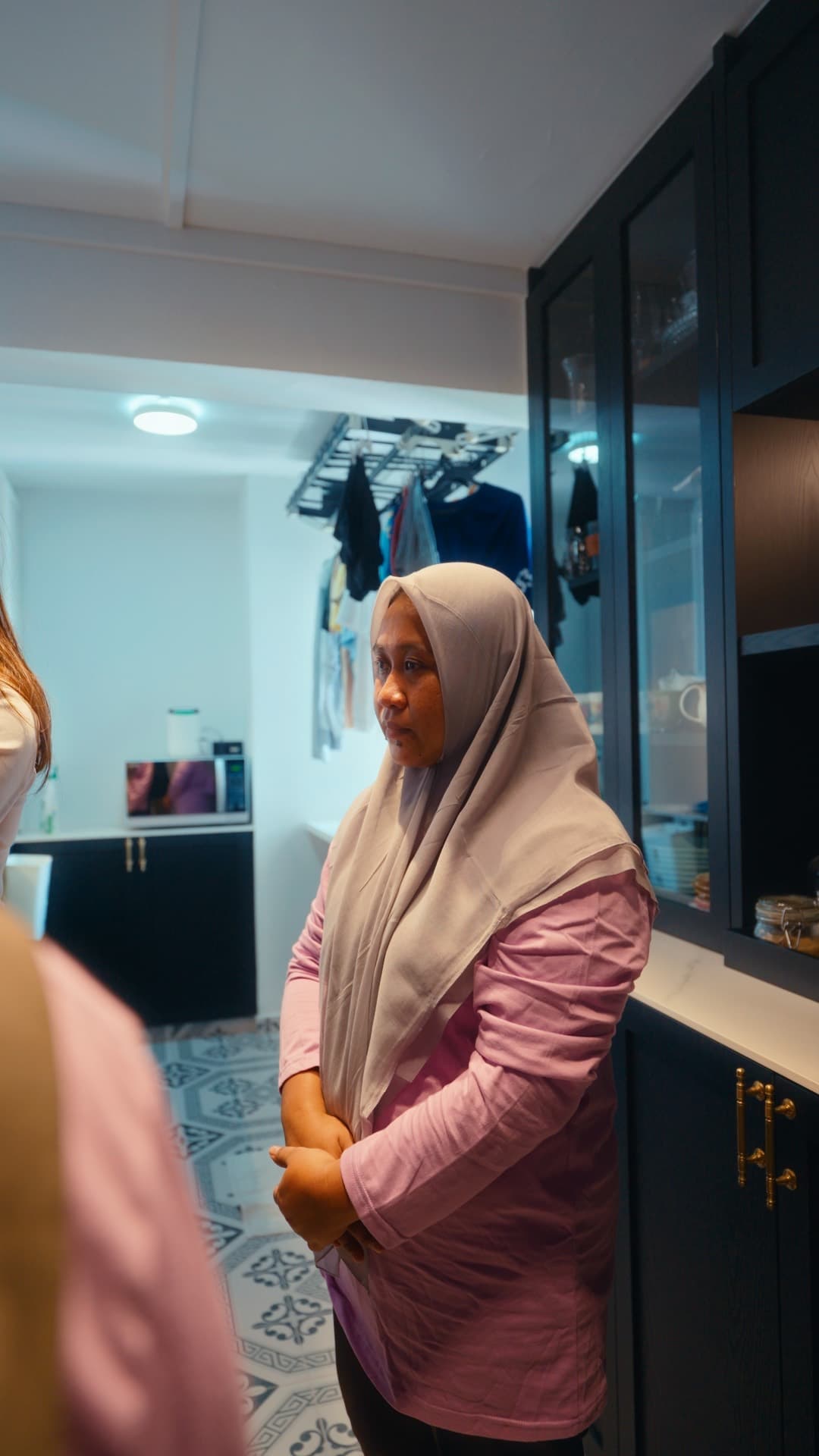
Why families choose Jaz Helpers
We ask how old the youngest baby she cared for was, in weeks, and for how long. Generic childcare experience is not newborn experience, and we do not present it as though it were.
A helper is not an infant care nurse and not a confinement nanny. If your situation needs more than a helper can safely give, we say so, even when that means we do not make a placement.
The first eight weeks decide whether a childcare placement holds. We stay reachable through them so small problems get corrected early instead of surfacing in month three.
The limits, plainly
There is no mandatory infant care certification in Singapore. MOM's eligibility rules for a domestic helper do not include a caregiving qualification, so any claim of being trained in infant care describes voluntary training, not a licence. Ask what the training actually covered, who ran it and how long it lasted. The answer tells you more than the certificate does.
The helper you want is not the one who never makes a mistake with a baby. It is the one who tells you straight away when something has gone wrong instead of managing it quietly and hoping it resolves. Escalating early is the single most valuable habit in infant care, and it is the thing we probe hardest for.
The long version
The levy concession in detail, night feeds, the first eight weeks, cameras and house rules, and the honest list of situations where a helper is the wrong answer. Written for parents doing the research rather than for search engines.
Interviewing for childcare
How old was the youngest baby you cared for, in weeks, and for how many months?
What the answer tells youA real answer has numbers in it and a family attached to it. Warmth about liking babies is not experience.
Did you do the night feeds alone, or was the mother or a nanny awake with you?
What the answer tells youThis separates helping with a baby from running a baby. Both are honest answers. Confusing the two is what goes wrong later.
Walk me through sterilising a bottle, start to finish.
What the answer tells youListen for sequence and detail, not vocabulary. Someone who has done it a thousand times gets the order right without thinking about it.
The baby has cried for twenty minutes and feeding has not helped. What do you do next?
What the answer tells youThe answer you want ends with telling you. Quiet coping is the single most damaging habit in infant care.
He rolls off the changing mat while you reach for a nappy. What happens in the first minute, and who do you call?
What the answer tells youYou are looking for a calm sequence and for you being called straight away, not for a clinical answer.
Which former employer can confirm the baby care specifically?
What the answer tells youA name and a contact. Vague affection for a family in Singapore is not a reference.
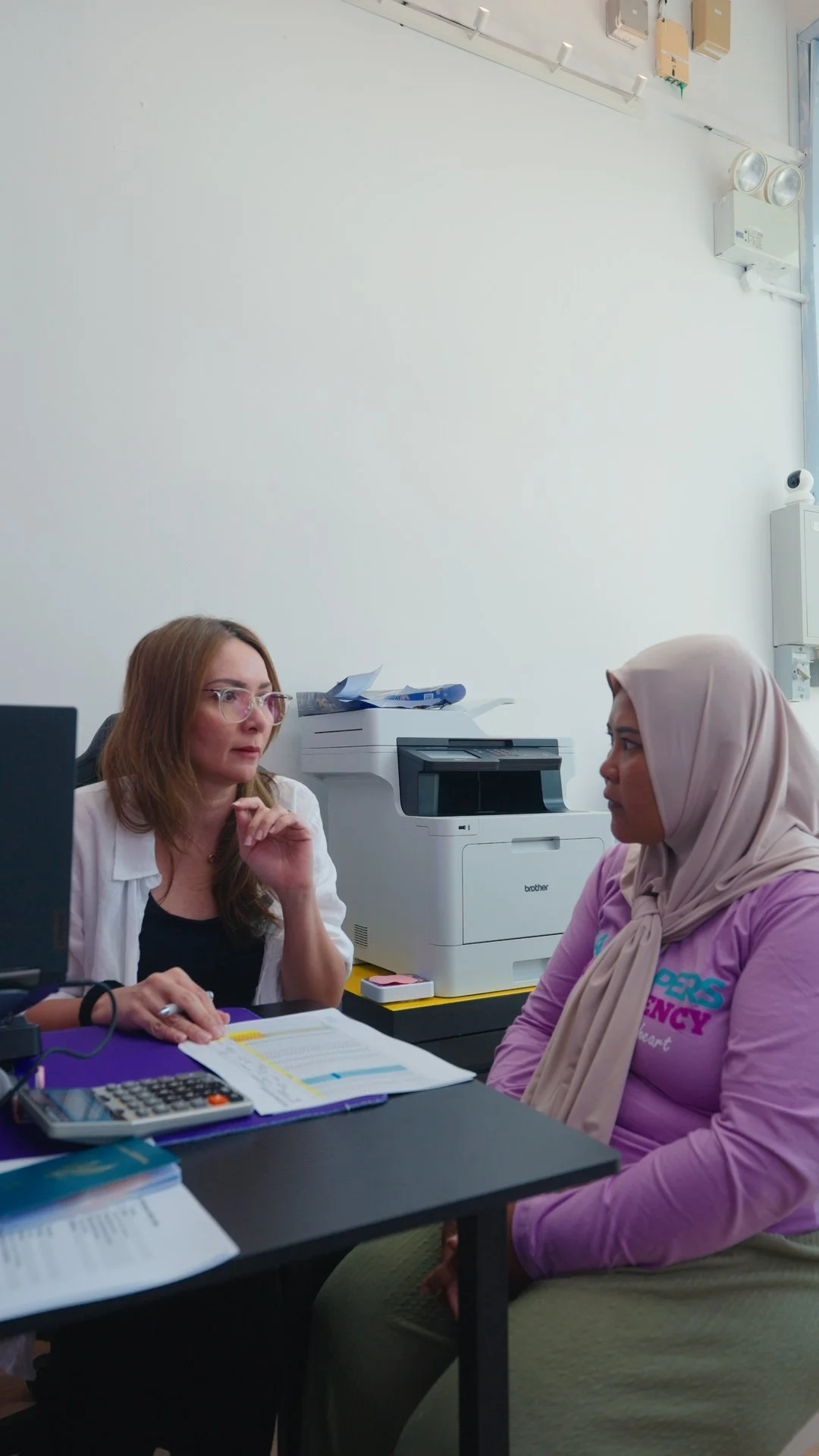
Listen to the texture of the answer, not the fluency. Rehearsed answers are smooth, general and confident. Real answers are specific, hesitate in the right places and contain a detail nobody would invent. If a reply comes back word perfect, ask a second scenario question immediately. On language, the test is not how well she speaks English. It is whether she can take an instruction about a fever and then tell you on the phone what actually happened.
Safety and supervision
She shadows you. You do the feeds, the bath and the bedtime with her beside you, and you say out loud why you do things the way you do.
She runs the routine with you still in the flat. Expect small things to be different: swaddling, bottle temperature, a nap that drifts. Those are normal and correctable.
You step back in stages, starting with short absences and extending them. Anything about sleep safety, anything left unreported and anything you have asked twice about needs a conversation the same day.
Night feeds have to be agreed before she signs, and something has to come off the daytime list in exchange, with a real nap window in the afternoon. She is entitled to a weekly rest day, and since January 2023 at least one rest day each month cannot be compensated away with pay. Tired hands are the mechanism behind scalds, falls and unsafe sleep, so this is a safety rule before it is an employment one.
Cameras belong in common areas, never where she sleeps or bathes, and you tell her where they are on day one. A disclosed camera protects her as much as it protects you. A hidden one poisons the relationship the moment it is found, and it will be. Write down the household agreement before she arrives: nights, the rest day, phone use, screen time, cameras, and who decides on feeding and sleep when the grandparents disagree.
The process and timeline
Ages, routine, allergies, languages at home, who is around during the day and what genuinely needs covering. About twenty minutes, on WhatsApp or in our office.
Biodata for helpers whose experience matches your children's ages, with honest notes on where each one is strong and where she is not. Usually within a few days.
In person or by video, using the questions above. Take a second round if you want one. Nobody should be rushed into deciding who holds their baby.
Work Permit application, insurance, security bond, medical examination, the Employers' Orientation Programme if this is your first helper, and the Settling-in Programme once she is here.
Orientation in your home, supervision that steps back in stages, and us on the phone through the settling-in period.
How long does it take? A transfer helper already in Singapore can often start in about two weeks. Hiring from overseas usually runs six to eight weeks or more, because selection and deployment come first. Within that, the Work Permit application is about one week through MOM's eService, or about three weeks if you cannot use Singpass and submit the form instead. The Settling-in Programme has to happen within 7 days of her arrival, excluding Sundays and public holidays, and her medical examination within 14 days. The paperwork is the fast part. Finding the right person is the slow part, so if you are due in three months, start the conversation now.
The costs, clearly
Where there is a Singapore Citizen child below 16 in the household, and MOM's qualifying conditions are met, the levy is the concessionary S$60 a month rather than S$300 for a first helper or S$450 for a subsequent one. It is not granted to every household automatically. A child who is a Permanent Resident does not qualify under this category, the concession runs at one helper per eligible person and is capped at two helpers in a household, and an employer who is not the child's parent, usually a grandparent, has to register the child as a household member before it applies. Read the conditions on the MOM levy concession page and budget on the standard rate until you know you qualify.
Worth knowing early: when your youngest eligible child turns 16 the concession ends and the levy steps back up to the standard rate, which is S$240 more a month for a first helper. If your youngest is 14 or 15, plan for it now.
Two things families are routinely told wrongly. The security bond is a banker's or insurer's guarantee, not S$5,000 in cash you hand over, and it does not apply to Malaysian helpers. And you may not ask your helper to pay any part of her own medical expenses, including amounts above what the required insurance covers.
Singapore does not set a minimum wage for migrant domestic workers. MOM requires only that you pay the salary you declared in the Work Permit application, in full and on time. What she is paid is agreed between you, and for childcare it is worth agreeing the night arrangement at the same time rather than later. For the full picture in plain language, read our guide to the cost of hiring a helper in Singapore.
It depends on the placement, whether she is a transfer helper or an overseas hire, and what your household needs. Quoting a number that turns out to be wrong for your situation is exactly the behaviour this page is written against, so we talk it through with you directly instead, with nothing hidden.
With a baby in the house, the honest question is not which helper you want. It is who will be at home for the first eight weeks while she learns your child. Get that right and the placement usually lasts for years.
Common questions
The broader hiring questions, from replacement support onwards, live on the FAQ page. When her Work Permit comes up for renewal, our work permit renewal page sets out what MOM needs and the dates that matter. You can also browse everything we help families with, or read the long-form guide to hiring a helper for infant care.
Send us their ages and what your week actually looks like, and we will tell you what kind of helper fits, how long it would take, and whether now is the right moment at all.
Mon to Fri 10am to 8pm · Sat 10am to 3pm · MOM EA Licence 24C2490