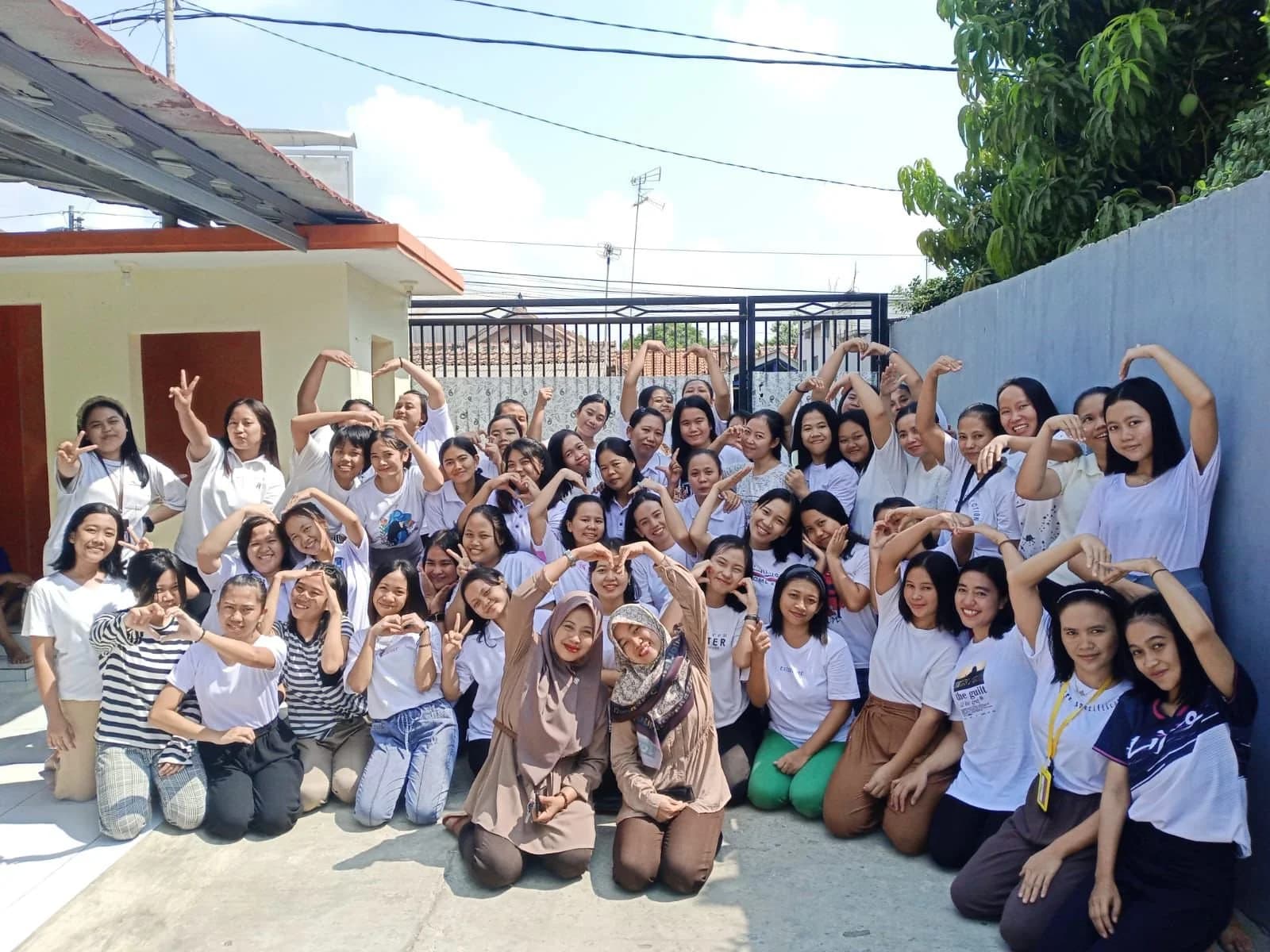
Indonesian helpersin Singapore, chosenfor your home
Indonesia has supplied Singapore homes for decades, so the pool is deep and many of the helpers in it have already finished a contract here. We match on what she has actually done and on how your household runs, and we tell you when an Indonesian helper is not the right answer.
The short answer. Jaz Helpers is a MOM-licensed Singapore agency (EA Licence 24C2490) that places helpers from Indonesia and Myanmar. Most of the Indonesian helpers we place are Muslim, and Bahasa Indonesia and Malay are close relatives, so a Malay-speaking household usually understands her from the first day. A transfer helper already in Singapore can often start in around two weeks. A helper coming from Indonesia usually takes six to eight weeks or more. We match on experience and fit, not on a passport.
Most pages about Indonesian helpers list virtues. We would rather list the things that actually change how a placement goes: language, the kitchen, what the pool looks like, what she was taught, and what the first week in Singapore involves.
Language that flows
Bahasa Indonesia and Malay grew from the same root, so a Malay-speaking household and an Indonesian helper usually understand each other from the first conversation. English varies by the person, so test it at the interview rather than assume it.
Kitchen and faith
Most Indonesian helpers we place are Muslim, though not all. A halal kitchen is a procedure that can be taught, and a helper who keeps halal at home already knows it. For prayer times, Ramadan and halal matching in detail, see our page on helpers for Muslim and Malay households.
Singapore experience in the pool
Indonesia has sent helpers to Singapore for decades, so proportionally more Indonesian helpers have already completed a contract here. That is a fact about the pool, not a promise about the person, which is why we ask what she did in her last household first.
Training centres differ more than countries
Both countries deploy through licensed training centres, and what a helper was taught varies more between centres than between countries. Ask what she learned and how long she practised it. Our guide on reading a helper's biodata shows what the paper does and does not tell you.
First-time helpers and the Settling-in Programme
A helper who has never worked in Singapore attends the Settling-in Programme within 7 days of arrival, excluding Sundays and public holidays, before she starts. The provider fee is S$76.40 to S$92.65. A transfer helper does not attend it again.
The everyday work
Cooking, cleaning, childcare and eldercare each ask for different experience, so tell us which one fills most of the week and we shortlist for that first. See what a childcare helper, an eldercare helper or a housekeeping helper covers day to day.
Who it is right for
Who an Indonesian helper is right for
Four households where the fit is usually strongest. Each one is about the home rather than the passport, and if yours is not on the list the matching questions are the same.
Malay-speaking grandparents at home. If the people she spends the day with speak Malay and little English, the shared language does more for the placement than any certificate.
A halal kitchen. A helper who keeps halal herself runs a separated kitchen without being told twice, and she understands why it matters.
A home that wants Singapore experience. The Indonesian pool has more helpers who have completed a contract here, so if you want someone already used to a high-rise flat and Singapore appliances, say so and we shortlist for it.
Tight dates. If you need help within weeks rather than months, an Indonesian transfer helper already in Singapore is usually the route.
If none of these describes your home, tell us anyway. The answer may be a Myanmar helper or a different route. At the interview, ask about her last household, the youngest child or the oldest parent she cared for, and what she cooked most weeks. We will tell you what her biodata leaves out.
Eldercare practice at a partner training centre
Why Jaz Helpers
Why families choose Jaz Helpers for an Indonesian helper
Any agency can send you biodata with Indonesian on the first line. The work is in reading what sits beneath it, letting you meet the person, and being there when the first month is bumpy.
Matched on real experience
We shortlist on what she has done, counted in months and households, not in adjectives. If her experience is thin for what you need, you hear it from us before you meet her.
Meet before you commit
A transfer helper can meet you in person at our office or in your home. A helper still in Indonesia meets you by video. Either way you speak to the person, not only to her paperwork.
A Malay-speaking team, reachable after
Speak to us in Malay or English from the first message. We stay reachable once she has started, and we help you work through anything that comes up.
The honest part
An Indonesian helper is not automatically the right helper
This is where we differ from most pages on the subject. Nationality tells you less than the listings suggest, and we would rather say so before you shortlist than after she starts.
Nationality is a weak predictor of how a placement goes. Language and kitchen practice track it loosely. Character does not track it at all, and we will not describe a candidate as hardworking, patient or obedient on the strength of her passport. Those words are not measurable, and they would not survive being said in front of her.
MOM's eligibility rules are the same for every source country: female, aged 23 to below 50 when you apply, with at least eight years of formal education. We place Myanmar helpers too, and for some households one of them is the better fit. If you arrived certain you want an Indonesian helper, we will still ask what the household needs, and say so if the answer points elsewhere.
On pay, Singapore sets no minimum salary for a helper, and MOM requires only that you pay what you declared. The figures that circulate online as an Indonesian minimum could not be verified against a primary source, so we do not publish a band. Our guide to the cost of hiring a helper shows what the numbers rest on, and our comparison of Indonesian and Myanmar helpers takes the household questions one at a time.
Two routes, two timelines
New from Indonesia, or a transfer already here
Both routes end with the same Work Permit. What differs is everything before it, and that is where the weeks go.
Indonesian transfer helper, already in SingaporeAround two weeks
New helper coming from IndonesiaSix to eight weeks or more
The Work Permit application itself takes about one week through MOM's eService. What lengthens an overseas hire is everything before it: selection, training centre release and travel. After she lands, a first-time helper attends the Settling-in Programme within 7 days and has her medical examination within 14 days. A transfer helper skips the travel and the programme. Our guide to how long hiring takes lays out both routes.
How it works
How hiring an Indonesian helper works
Five steps, in the order they happen. The first takes ten minutes on WhatsApp. The rest we carry, and we tell you where each one stands.
01
Tell us about your household, in Malay or English
Who lives at home, who she will spend the day with, what the kitchen keeps and what you need done. That is enough to start.
02
We shortlist on experience, with plain notes
Biodata of helpers whose past households look like yours, each with our read of what she has actually done and where her experience is thin.
03
You interview, and take your time
In person for a transfer helper, by video for one still in Indonesia. Bring the questions from the section above, and take a second round if you want one.
04
We handle the permit and the programmes
Work Permit application, insurance, the security bond, the medical examination, and the Employers' Orientation Programme if this is your first helper. MOM runs the classroom version in Malay.
05
She arrives, and we stay reachable
A first-time helper attends the Settling-in Programme in her own language within her first week. We check in after she starts, and you can reach us whenever something needs sorting out.
A cohort at a partner training centre. Selection and exit paperwork happen here, before she flies.
The cost, clearly
What an Indonesian helper costs
The same for every helper in Singapore, whichever country she comes from. Each figure comes from MOM's own pages and is kept in one place on this site, so a number changes only when MOM changes it.
CostAmountWhen
Levy, monthlyS$300 for a first helper, S$450 for a second, or S$60 where the household qualifiesMonthly, for as long as she is employed
Work Permit application and issueS$70 in totalOne time, half at application and half on issue
Employers' Orientation Programme, first-time employersS$29.98 to S$76.30At least 2 working days before you apply. Classroom sessions are offered in Malay
Settling-in Programme, first-time helpersS$76.40 to S$92.65Within 7 days of her arrival, excluding Sundays and public holidays
Measles immunity, where a child under 7 is not fully vaccinatedS$80 to S$140Since 1 September 2025
Security bondS$5,000 guarantee from your insurer, not cashBefore she arrives. Not counted in any total on this site
Medical and personal accident insuranceCover of at least S$60,000 each. The premium depends on the insurerBefore she starts, and kept in force throughout
Her salaryAgreed with you and declared to MOM. No floorMonthly, in full and on time
The security bond is the number most often misread. It is a guarantee your insurer or bank furnishes, usually bundled into the insurance package, not S$5,000 you hand over, so we leave it out of every total. The levy is the monthly figure that actually shapes a budget, and the concessionary rate applies where your household meets MOM's conditions.
Singapore does not set a minimum wage for migrant domestic workers. MOM requires only that you pay the salary you declared in the Work Permit application, in full and on time. If this is your first helper, the Employers' Orientation Programme comes first, and MOM offers the classroom version in Malay. For the full picture in plain language, read our guide to the cost of hiring a helper in Singapore.
Our own fee is not on this page
It depends on whether she is a transfer helper or a new hire from Indonesia, and on what your household needs. A number on a page is either wrong for you or vague enough to be useless, so we give it to you directly, in writing, before you commit.
Families ask us for an Indonesian helper and then describe a Malay-speaking grandmother, a halal kitchen and a toddler. The nationality was never the brief. The household was, and that is what we match.
The Jaz Helpers team
Common questions
Questions families ask about Indonesian helpers
The questions specific to an Indonesian helper. The general ones about hiring, cost and rest days live on our FAQ page, linked below.
Three reasons hold up, and one does not. Bahasa Indonesia and Malay are close relatives, so a Malay-speaking household understands her from the first day. Indonesia has supplied Singapore for decades, so the pool is large and more of its helpers have already finished a contract here. And most Indonesian helpers are Muslim, which suits a home that keeps halal. Character is the reason that does not hold up: no nationality is more patient or hardworking than another.
No. Singapore sets no minimum wage for migrant domestic workers, and MOM requires only that you pay the salary you declared, in full and on time. The Philippines is the only source country with a floor, set by its own government. The figures quoted online as an Indonesian minimum could not be verified against a primary source, so we do not publish a band. Experience moves pay, and we talk it through with you against the helper you are actually considering.
Six to eight weeks or more for a helper coming from Indonesia, because selection, training centre release and travel all come before the Work Permit. Around two weeks for a transfer helper already in Singapore, depending on her current employer's release and MOM processing. The Work Permit application itself takes about one week through MOM's eService. We tell you at the start which route fits your dates, and we do not quote the best case as the usual one.
Only if she has never worked in Singapore as a helper before. A first-time helper attends it within 7 days of arrival, excluding Sundays and public holidays, and it is conducted in her own language. Three MOM-appointed providers set their own fee, from S$76.40 to S$92.65. A transfer helper who has already worked here does not attend it again, and your in-principle approval letter states which category applies.
Yes. A transfer helper is already in Singapore, so you can meet her in person, at our office or in your home, before anything is signed. A helper still in Indonesia can meet you by video call, and a second conversation is normal if the first one leaves questions. Ask about her last household, what she cooked and who she cared for. What a biodata cannot show you, a conversation usually can.
The question usually hides a more useful one, which is what your household needs. Language and kitchen practice are the two things that track nationality, and only loosely. If the grandparents speak Malay, an Indonesian helper has a head start. If the work is heavy eldercare, her real experience matters far more than her passport. We place from both countries, and our guide on choosing between an Indonesian and a Myanmar helper walks through the household questions without the stereotypes.
It varies by the individual far more than by country. Schooling, the training centre she came through and any previous Singapore contract explain most of the difference. Test the person rather than the label: ask her to explain a task with a few steps back to you and see how much survives. A Malay-speaking household has a head start, because Bahasa Indonesia and Malay are close relatives.
Tell us early. Most first-month trouble is orientation, and a phone call sorts much of it. Where it is genuinely not working, what happens next follows the written terms we give you before you commit, and since June 2022 MOM has required an agency to refund at least 50 percent of its service fees if the helper's employment is terminated within her first six months and the refund conditions are met. Our guide on what happens when a placement does not work out explains your rights.
★★★★★A huge thank you to Zai and the team. They really listened to our needs and coordinated everything from start to finish. Bringing a new helper into our home felt manageable because of their care and support.