
Feeding and fresh water
Meals at the times you set, in the portions you set, bowls washed, and water topped up through the day rather than once in the morning.

MOM EA Licence 24C2490 · Singapore
Helpers who are good with animals
Feeding, walks, litter trays, cage cleaning and a watchful eye while you are out. We place helpers who are genuinely comfortable with animals, and we do not pretend a candidate is fine with dogs when she is not.
The short answer. A pet care helper is a domestic helper who looks after your animals as part of her everyday household work: feeding and fresh water, walks and play, litter trays, cages and tanks, grooming between professional appointments, and telling you early when something looks wrong. She is not a dog trainer, a groomer or a vet nurse. The one thing that decides whether it works is whether she is genuinely comfortable with your animals, which is why we ask every candidate directly before she reaches your shortlist.
What she actually does
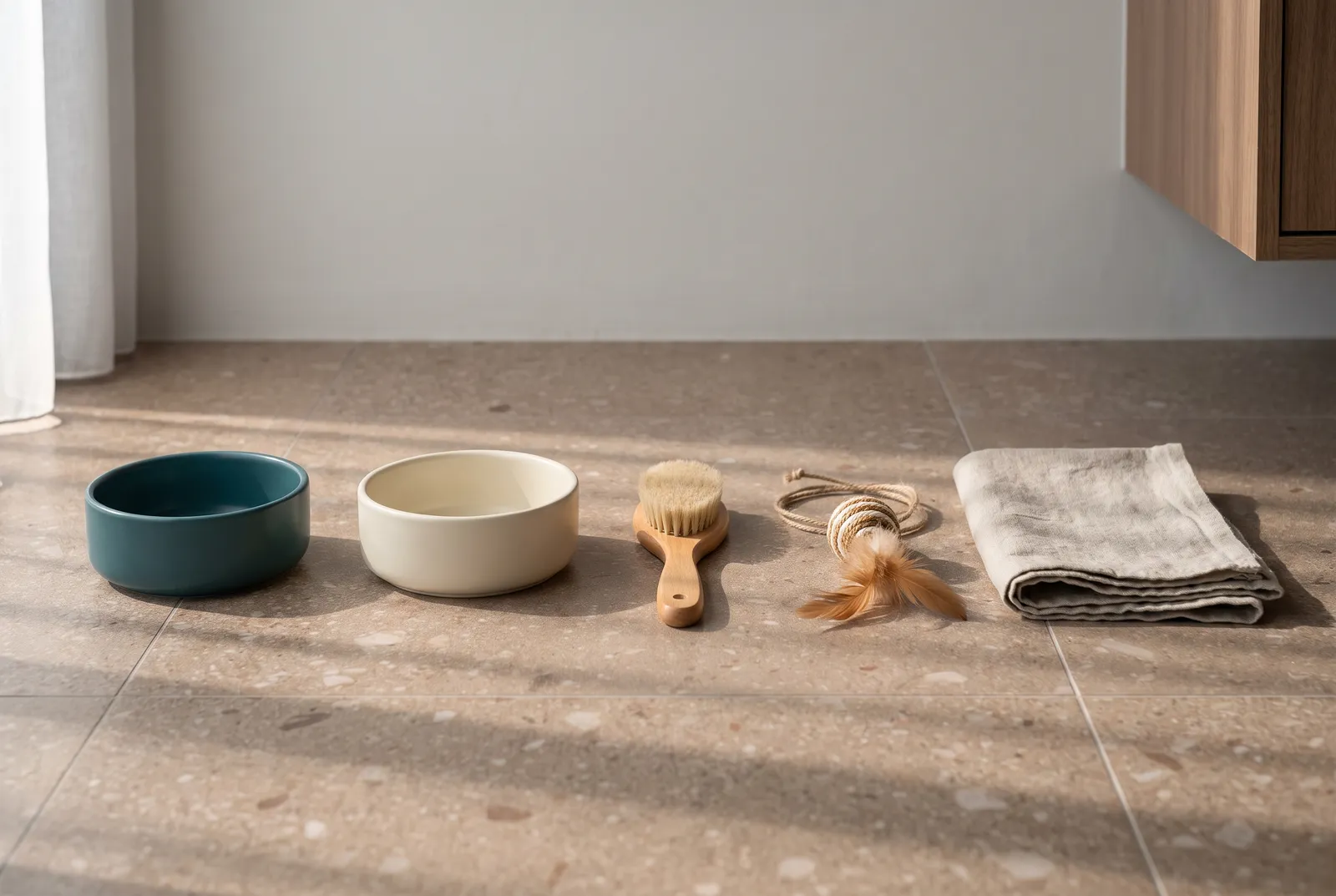
Meals at the times you set, in the portions you set, bowls washed, and water topped up through the day rather than once in the morning.
Daily walks on the route you agree, at the times that suit the heat, or indoor play and stimulation for a cat that never goes out.
Litter trays scooped daily, cages and hutches cleaned on a rhythm, tank water changed, and the area around them kept hygienic.
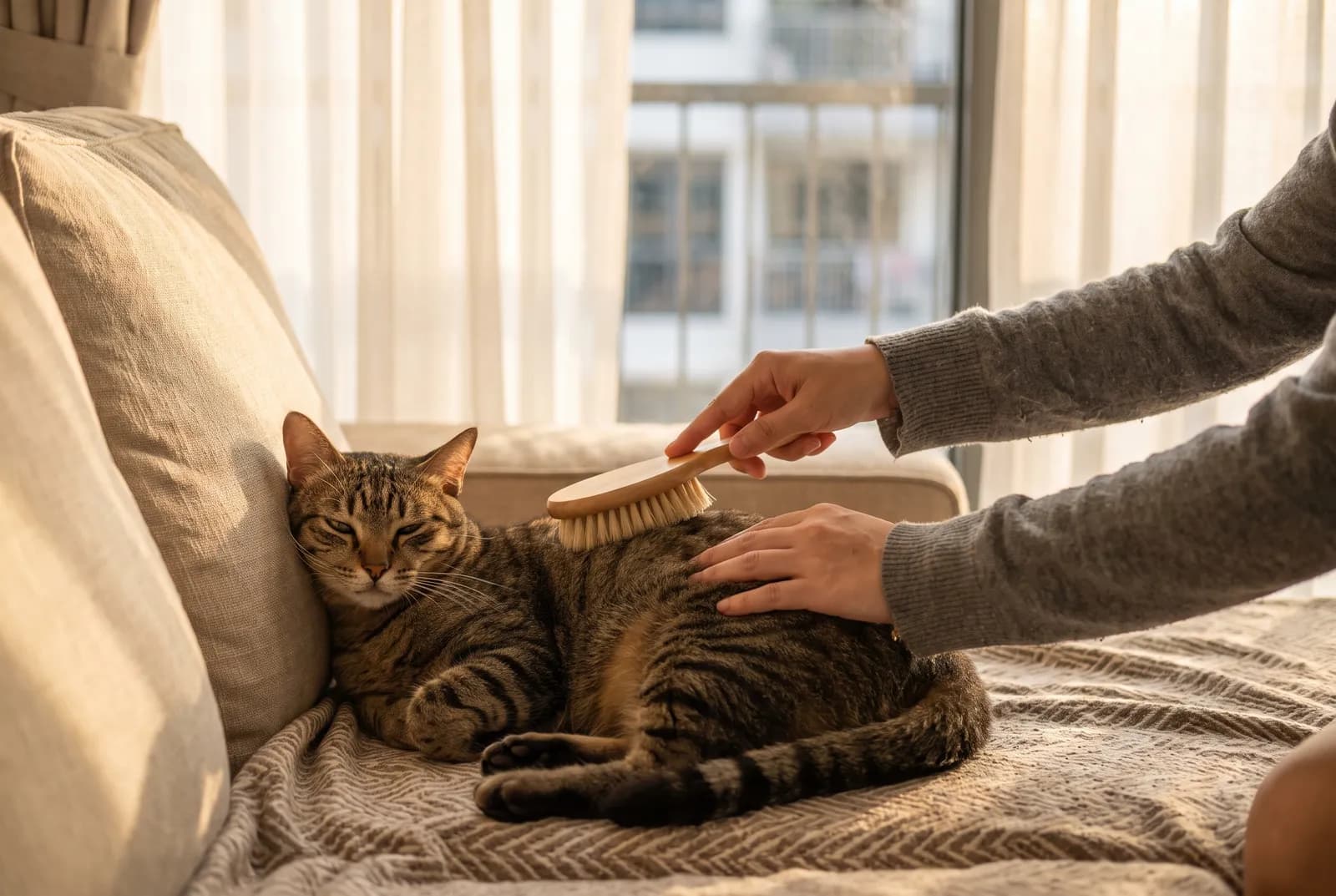
Brushing, wiping paws and coat after a walk, checking ears and eyes, and a bath once you have shown her how you want it done.
Off her food, drinking more than usual, limping, scratching, hiding. She tells you the same day, not at the end of the week.
An animal that struggles alone has someone at home. For a lot of families that is the real reason they started looking.
Pet care almost never stands alone. In most homes it sits inside the rest of the day, between cooking, cleaning and laundry, so the real interview question is not only whether she can look after a dog, but whether she can look after a dog and still get everything else done. If that mix is what your household needs, it is worth reading what a housekeeping helper covers day to day.
Where she works matters as much as what she does. MOM states that a helper can only work for her employer at the residential address declared to MOM, can only perform domestic chores, and cannot take on work with other employers, so she cannot be sent to walk a neighbour's dog or to lend a hand at a pet business. See MOM on employment rules for migrant domestic workers.
Who it is right for
Two working adults and a dog alone from morning to evening. Someone at home changes the shape of that dog's day, and usually of your evenings too.
The pet was there first. You need help that holds both routines together instead of quietly letting one of them slide once the baby arrives.
Medication at fixed times, more cleaning up, and someone who notices the day she stops eating. This is where a steady, familiar presence matters most.
Families often come to us for one thing and find the requirement is really two. If your household also has young children, read what a childcare helper covers, and if the day is mostly about running the home, start with housekeeping. We would far rather match once, properly, than place twice.
Why JazHelpers
Here is the part almost nobody puts in writing. A large number of candidates are genuinely afraid of dogs. Many grew up where dogs were guard animals or strays rather than family members, so a bark at the door is frightening rather than familiar. Others have religious or cultural reasons for not handling dogs, particularly around contact with saliva, and would need to wash carefully after any contact. Neither of those is a flaw, and neither is something anyone can be talked out of in an interview.
What breaks placements is pretending otherwise. Asked "are you okay with pets?" in a room full of strangers, almost every candidate says yes, because she wants the job. Two days later she is edging around her own living room, the dog reads the fear exactly as dogs do, and by the end of the week you are on the phone to the agency. We head that off earlier, by asking a better question of the right person.
We ask every candidate directly, in her own language, before she is ever put in front of you. Not "do you like animals" but the specific, slightly awkward, genuinely useful questions beside this. If she is uncomfortable she tells us, and we place her with a household that has no pets. We do not place a helper who is not comfortable with your animals, even when she is the strongest candidate on the shortlist, and even when it means you wait a little longer.
A helper who is nervous around your dog is not a training problem. It is a matching mistake.
Asked in her own language, before a single profile reaches you.
Dogs, cats and small animals
The biggest ask of the three. A dog needs her physically, outdoors, twice a day, in public, in Singapore heat.
Be honest about size. A large dog that pulls is a physical job, not a willingness question. Tell us the breed and the weight at the start and we will match for it.
Usually the easier match. Most candidates are comfortable with cats, and the work is indoors, quiet and predictable.
The catch is claws. A helper who has never handled a cat can be more nervous about scratching than about a dog. It is worth five minutes at the interview.
Rabbits, hamsters, birds, fish and reptiles. Lighter work, but exacting, and the easiest to get quietly wrong.
Write it down. These animals decline quietly and fast. A one page routine stuck on the fridge is worth more than any amount of explaining it out loud.

Before she starts
At the interview
If you would rather set your household down in writing first, the household assessment form walks you through the same ground and reaches us before the call does.
In the first week
On rest days, the rule is one a week on a day you both agree, and at least one a month that cannot be compensated away, per MOM on rest days, health and well-being. Your animals do not take the day off, so agree the cover before she starts.
The process and timeline
Day one
Species, breed, size, age, temperament, medication, and the honest part: what a previous helper found hard. Fifteen minutes on WhatsApp is usually enough.
Usually days two to five
We go back to candidates with the pet questions before a single profile reaches you. Three helpers who are genuinely comfortable beat ten who are merely willing.
Usually within the first week
In person or by video. Bring a photo of your animal, ask the awkward questions, and take the time you need.
Often around two weeks, longer from overseas
Work Permit, insurance, security bond and medical examination, tracked by us. A transfer helper already in Singapore is the fastest route; from overseas it usually runs six to eight weeks or more. The exact date depends on MOM processing and, for a transfer, on her current employer's release.
The first month
The first two weeks tell you almost everything. If the fit with the animal is wrong, we would far rather hear it in week one than in month six.
How long does it take? A transfer helper already in Singapore can often start in around two weeks once the paperwork clears, depending on her current employer's release and MOM processing. Hiring from overseas usually takes six to eight weeks or more, because of training and Work Permit processing, and the date we give you at the start is one we expect to keep.
Fees, clearly
Monthly levy
The standard rate for a first helper. A second or subsequent helper is S$450 a month, and a household that meets MOM's criteria pays the concessionary rate of S$60 a month. See paying the levy and the levy concession.
S$300
Work Permit
S$35 to apply plus S$35 on issue. Fixed MOM fees, not agency charges. See applying for a Work Permit.
S$70
Security bond
Not cash. It is a banker's or insurer's guarantee, and it does not apply to Malaysian helpers. Treating the full S$5,000 as money you must hand over is the most common error in Singapore cost guides. See MOM on the security bond.
S$5,000
guarantee, not cash
Settling-in Programme
First-time helpers only, so a transfer helper who has worked here before does not need it. Three MOM-appointed providers set their own fee. See MOM on the Settling-in Programme.
S$76.40 to S$92.65
Employers' Orientation Programme
First-time employers only, completed at least two working days before you apply. Online is the cheaper end. See MOM on the Employers' Orientation Programme.
S$29.98 to S$76.30
Measles immunity, where required
Required since 1 September 2025 where a child under 7 in the household is not fully vaccinated. Two MMR doses at least 28 days apart, and the range is MOM's own estimate. See MOM's announcement of the measles immunity requirement and MOM on the medical examination.
S$80 to S$140
Insurance and the medical examination
Medical and personal accident insurance is required, and so is the medical examination. Premiums differ between insurers, so we will not print a number here that we cannot stand behind. See MOM on insurance requirements.
varies by provider
Her salary
Singapore does not set a minimum wage for migrant domestic workers. MOM requires only that you pay the salary you declared in the Work Permit application, in full and on time. Pet care carries no fixed premium, though real experience with animals is worth paying for, like any other skill.
what you agree
Our own placement fee
It depends on your household and the route you take, so we quote it to you directly rather than publish a number that would be wrong for half the families reading this. Ask, and we will tell you plainly before you commit to anything.
Every figure above is a Ministry of Manpower or third-party cost, not ours, and each was checked against its source on 20 July 2026. For the whole picture in plain language, including what you actually need up front, read our guide to the cost of hiring a helper in Singapore.
Every family asks whether the helper likes animals. The question that matters is whether she is comfortable alone with your dog on a Tuesday afternoon, when nobody is watching.
Common questions
Anything about paperwork, timing or replacement that is not answered here is covered on the main FAQ page, all 33 questions of it, or look through everything we help families with.
Tell us who lives with you, including the ones with four legs. We will find a helper who is genuinely comfortable with them, and we will say so honestly when a candidate is not.
Mon to Fri 10am to 8pm · Sat 10am to 3pm. EA Licence 24C2490.