
Indonesian or Myanmar Helper: Which Suits Your Household
Families ask us this constantly, and the honest answer is not the one most agency pages give. Nationality tells you very little about whether a helper will suit your home. Language, the religious and dietary practice in your kitchen, her experience with the care you actually need, and the individual person tell you almost everything. There are real differences worth knowing. They are just far smaller than the way this question usually gets answered.
Nationality is a weak predictor. Household fit is a strong one.
Both groups clear exactly the same bar. MOM requires every migrant domestic worker to be female, aged 23 to below 50 when you apply, from an approved source country, with at least eight years of formal education and a recognised certificate. Indonesia and Myanmar both sit on that list. Nothing in the rules makes one nationality more qualified than another.
So when a family asks which is better, we ask better at what. A home with a two year old and a Malay speaking grandmother has a different answer from a home with a bedbound parent and a dog. What moves a placement is language, practice in your kitchen, experience with the care you need, and temperament. Only the first two track nationality, and loosely.
Most comparison articles assign character traits by passport: one nationality warmer, another harder working, a third more obedient. Be sceptical of any page that does. It is not measurable, and it would be indefensible said in front of the woman it describes. Tendencies in language and training are real. Claims about character are not.
Language is the one difference that is genuinely structural
Bahasa Indonesia and Malay are close relatives, standardised from the same Malay root. An Indonesian helper and a Malay speaking family usually understand each other from the first conversation. Where the grandparents speak Malay and little English and are the people she is with all day, weight that heavily.
Burmese has no such relationship to Malay or English. It belongs to a different language family, so there is no head start of that kind. What there is instead is whatever English she has, and that varies far more between individuals than between countries. Schooling, training centre quality and prior Singapore experience explain most of it. Her passport explains very little.
MOM makes a related point in its guidance for employers: a helper new to Singapore, particularly one from a rural area, may struggle with your language, modern appliances and a high rise flat, and orienting her through that is the employer's job. The Settling-in Programme is conducted in her native language, because English is not assumed.
The test is not vocabulary. It is whether she can take an instruction that carries consequences and report back accurately when something goes wrong.
Religion, food, and how your kitchen actually runs
Indonesia is a Muslim majority country and most Indonesian helpers we meet are Muslim, though not all: Indonesia has large Christian communities. Myanmar is Buddhist majority, again with Christian and Muslim helpers among them. Those are tendencies in a population, not facts about the person in front of you. In practice:
- A halal kitchen. If your home keeps halal, a Muslim helper will already understand how the kitchen is separated and why. One who does not keep halal herself can still run it properly once taught: it is a procedure, not a belief.
- Pork and alcohol. A Muslim helper may prefer not to handle either. Some will cook pork for the family without eating it, some will not. Easy to settle before she signs, hard in month two.
- Fasting during Ramadan. If she fasts, plan the late afternoon workload and the timing of meals. Households that plan barely notice it; households that ignore it get a tired helper doing heavy work at the worst hour.
- Dogs. If you have one, ask directly. Some Muslim helpers observe rules about contact with dogs, particularly saliva, and will want to wash ritually afterwards. Others grew up around dogs. A helper who says she is uncomfortable is telling you early.
If yours is the household that keeps halal, we match for this directly: our page on helpers for Muslim and Malay households covers the kitchen, prayer times and Ramadan in detail.
On food this is a rule, not a courtesy. MOM requires three meals a day and instructs employers not to force a helper to eat food she is not supposed to eat or is not comfortable with, giving religious belief as its example. If she cooks separately, that cost is yours.
Training and deployment: what differs, and what does not
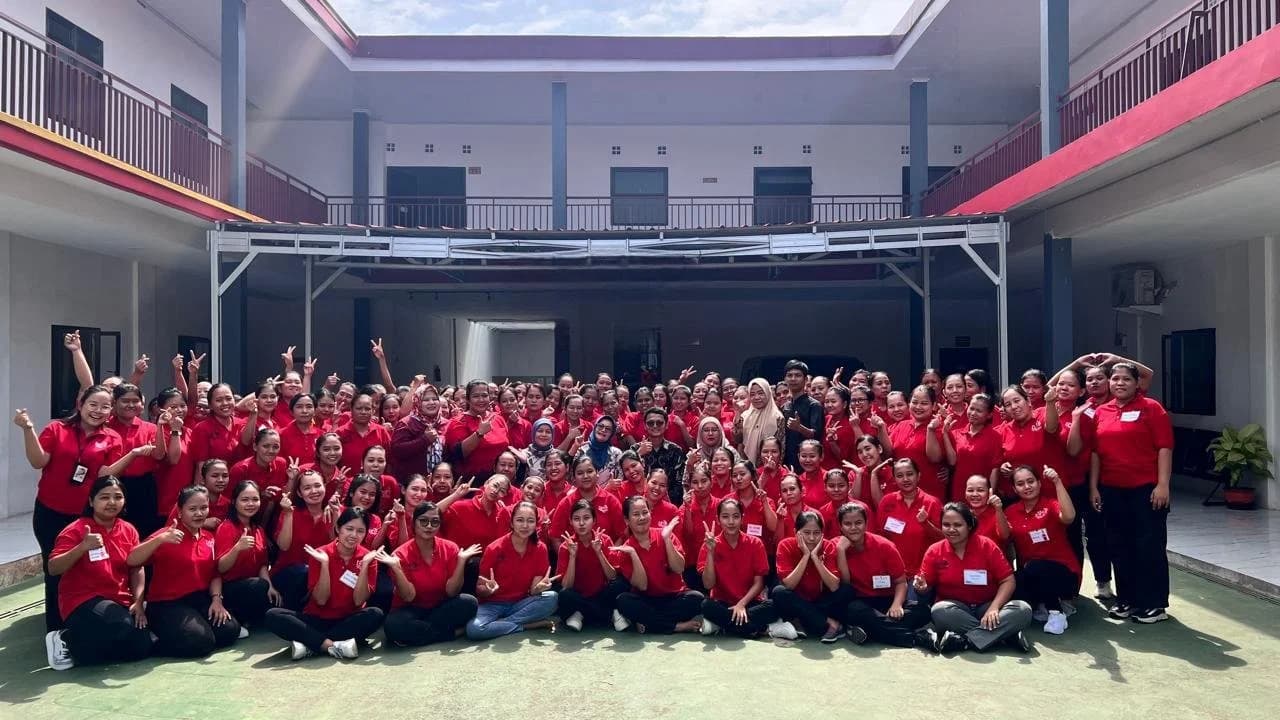
Both countries deploy through licensed training centres, and helpers arrive having done pre departure training in housekeeping, cooking, basic care and some English. The spread between centres is far wider than the spread between countries: one helper arrives able to work a Singapore kitchen, another with a certificate and little behind it. Ask what she was taught.
Indonesia has supplied Singapore for decades. Myanmar became common more recently, which mostly means proportionally more first time helpers from Myanmar and more Indonesian helpers who have already finished a contract here. That is a difference in the pool, not in the people. Either way, a first time helper from either country must attend the Settling-in Programme within 7 days of arrival, excluding Sundays and public holidays, before she can start work. MOM defines a first time helper as one who has never worked in Singapore as a helper before, so a transfer helper already here does not attend it again. Your in-principle approval letter states which it is.
What actually predicts a good placement
Use this instead of a nationality shortlist.
- Experience with the care you actually need. A newborn, a parent needing transfers and toileting, a child with additional needs, a dog. Ask who she cared for, for how long, and what she did daily. See childcare and eldercare.
- A shared language with whoever is home. Not with you, with the person she is beside all day. A Malay speaking grandmother makes language decisive. A toddler makes patience decisive.
- Practice compatibility in your home. Halal, vegetarian, pork, alcohol, fasting, prayer times, dogs. Settle every one before she signs.
- Whether she reports problems early. The best predictor of a placement lasting is whether she tells you straight away instead of managing it quietly. Ask about a mistake she made and what she did next. The answer is nationality blind.
- Why her last placement ended. Ask her, ask the agency, and see whether the accounts match.
- Whether your household is ready. A private sleeping space, a rest day you intend to honour, and someone with time to train her early on. This one is about you, and it decides more placements than her side does.
Be careful with salary bands by nationality
You will find confident tables giving an Indonesian minimum of S$550 or S$600 and a Myanmar minimum of S$500. We could not verify any of them against a primary source, as we set out in our guide to what hiring actually costs. Singapore sets no minimum wage for migrant domestic workers. MOM requires only that you pay, in full and on time, the salary you declared. That is a fact about Singapore law, not about every nationality: the Philippines enforces its own contract floor on Filipino helpers through its mission here, which is a separate calculation we set out in the cost guide. For Indonesian and Myanmar helpers, experience moves pay more than nationality does. We say the same on our Indonesian helper page, so you will not find a different figure there.
If you would rather talk it through than read a table, that is what our matching process is for.
Questions families actually ask
- Are Indonesian or Myanmar helpers better?
- Neither, and the question hides the useful one. Both meet the same MOM requirements, and what actually differs in practice is language, religious and dietary practice in your home, and her individual experience. Ask which helper suits your household, not which nationality does.
- Which is better if my family speaks Malay at home?
- An Indonesian helper, on language grounds. Bahasa Indonesia and Malay are close relatives standardised from the same root, so a Malay speaking household can usually communicate from the first day. Burmese is unrelated to Malay, so there is no head start of that kind.
- Do Myanmar helpers speak better English than Indonesian helpers?
- There is no reliable difference between the two groups. English level varies enormously between individuals, driven by schooling, training centre and whether she has worked in Singapore before. Test the individual rather than assuming from nationality.
- Can a Muslim helper cook pork, or work in a home with a dog?
- It depends entirely on the individual, so ask before she signs. Some will cook pork for the family without eating it and some will not. Some grew up around dogs and some observe rules about contact with them. Assuming either way is how a first week goes wrong.
- Is a Myanmar helper cheaper than an Indonesian helper?
- Singapore sets no minimum wage for domestic helpers, and the nationality salary tables circulating online could not be verified against a primary source when we checked. Experience moves pay more than nationality does. Budget from what the role actually needs.